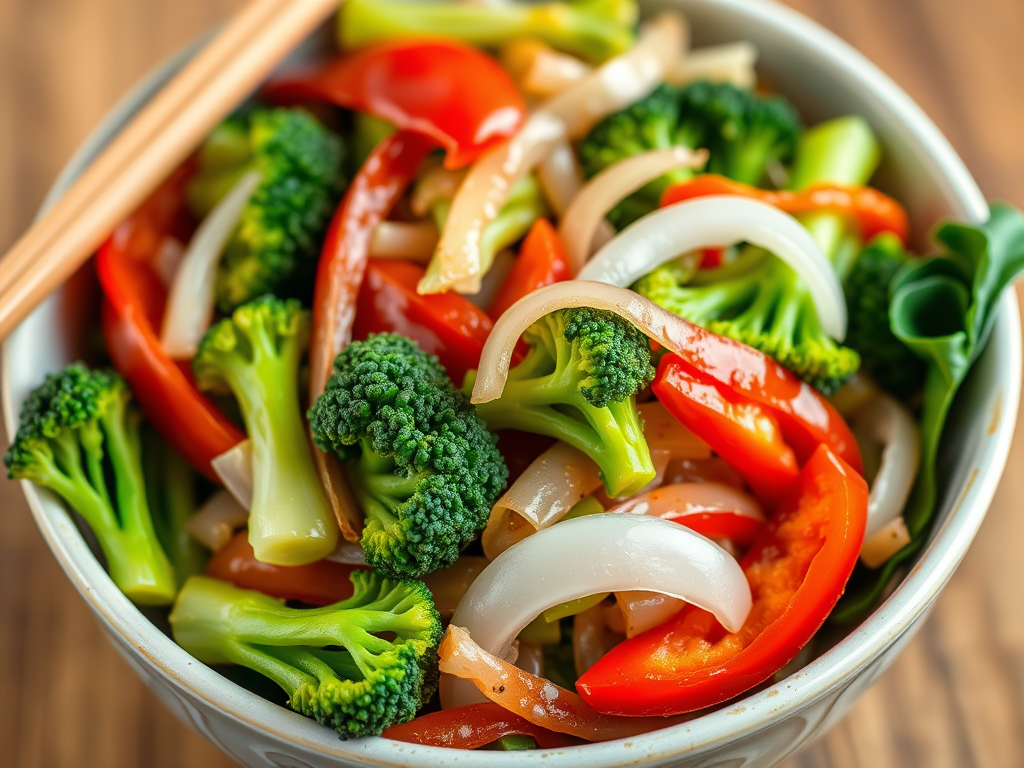
A simple vegetarian stir-fry is not only delicious but also incredibly versatile. This colorful dish combines fresh vegetables with a flavorful Asian marinade, making it a fantastic meal on its own or a great base for customization.
While this recipe is fully plant-based, you can easily add your favorite protein to make it even heartier. Chicken, shrimp, tofu, tempeh, or even thinly sliced beef can all work beautifully with these flavors. If using a protein, simply cook it first in a bit of sesame oil, remove it from the pan, and then follow the stir-fry steps before adding the protein back in at the end.
To round out your meal, serve this stir-fry over fluffy basmati rice or toss it with noodles for a satisfying and well-balanced dish. Whether you keep it vegetarian or mix in your protein of choice, this quick and easy stir-fry is sure to be a hit at the dinner table!
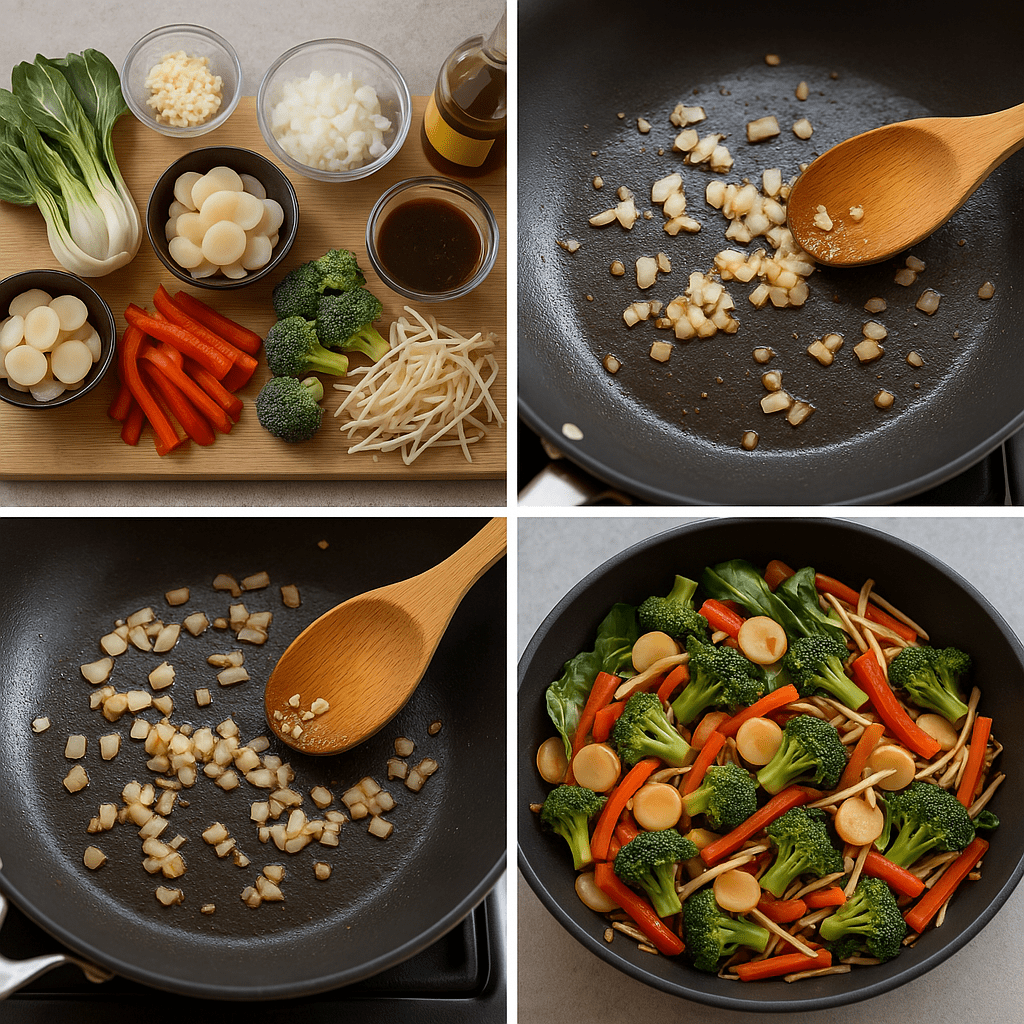
Vegetarian Stir-Fry Recipe
Yield: 2-4 Servings
Ingredients:
- 2 tbsp sesame oil
- 2 cloves garlic, minced
- 1-inch piece ginger, minced
- 1 small onion, sliced
- 1 head bok choy, chopped
- 1/2 cup water chestnuts, sliced
- 1 cup broccoli florets
- 1 red bell pepper, julienned
- 1 cup bean sprouts
- 1/4 cup Asian marinade (recipe below)
Asian Marinade:
- 1/4 cup soy sauce or tamari
- 1 tbsp rice vinegar
- 1 tbsp honey or maple syrup
- 1 tsp sesame oil
- 1/2 tsp red pepper flakes (optional)
- 1 tsp cornstarch (for thickening)
Instructions:
- In a small bowl, whisk together all marinade ingredients and set aside.
- Heat sesame oil in a large pan or wok over medium-high heat.
- Add garlic, ginger, and onion. Sauté until fragrant, about 2 minutes.
- Add bok choy, water chestnuts, broccoli, and red bell pepper. Stir-fry for 5-7 minutes until vegetables are tender but still crisp.
- Add bean sprouts and pour in the Asian marinade. Stir well and cook for another 2 minutes until sauce thickens slightly.
- Remove from heat and serve immediately over basmati rice or noodles.
Nutritional Information (Per Serving, Approximate):
- Calories: 180
- Protein: 5g
- Carbohydrates: 20g
- Fat: 8g
- Fiber: 4g
- Sodium: 600mg
The Art and Origins of Stir-Frying
A Timeless Cooking Technique
Stir-frying is one of the most beloved and versatile cooking methods in the world. Originating in China over 2,000 years ago, this technique has evolved into a global culinary staple. Its appeal lies in its ability to quickly cook food while preserving its flavors, colors, and nutritional value. Traditionally, stir-frying is done in a wok over high heat, using minimal oil to create a dish that is both delicious and healthy.
The Origins of Stir-Frying
The technique of stir-frying can be traced back to the Han Dynasty (206 BCE – 220 CE). Initially, it was used primarily for drying grains, but over time, it developed into a sophisticated cooking style. As trade routes expanded, stir-frying spread across Asia and beyond, influencing the cuisines of Thailand, Vietnam, Korea, and even Western cooking. Today, it is an integral part of many international dishes, from Chinese lo mein to Japanese yakisoba.
Essential Stir-Fry Techniques
Mastering stir-frying requires an understanding of a few fundamental techniques:
- High Heat Cooking: Stir-frying is all about using high heat to quickly sear ingredients. A wok is ideal because its shape allows for even heat distribution, but a large skillet can also work.
- Preparation is Key: Since stir-frying happens quickly, having all ingredients prepped and ready (a technique known as “mise en place”) is essential. Vegetables should be chopped uniformly for even cooking.
- Layering Ingredients: Ingredients should be added in stages based on their cooking time. Harder vegetables like carrots and broccoli go in first, while softer ingredients like bean sprouts and leafy greens should be added last.
- The Right Oil Matters: Use oils with a high smoke point, such as peanut, vegetable, or sesame oil. Avoid olive oil, as it burns at high temperatures.
- The Magic of the Sauce: A well-balanced stir-fry sauce enhances flavors. A classic combination includes soy sauce, garlic, ginger, rice vinegar, and a touch of sweetness from honey or sugar.
- Keep it Moving: The key to stir-frying is constant movement. Stir and toss the ingredients frequently to prevent burning and ensure even cooking.
Stir-Frying Across Cultures
While stir-frying originated in China, it has influenced numerous cuisines worldwide. Thai cuisine features pad see ew and pad Thai, while Korean cooking has dishes like japchae. In the West, stir-frying has become a popular method for preparing quick and healthy meals, often incorporating a mix of global flavors.
Conclusion
Stir-frying is more than just a cooking method—it is a celebration of fresh ingredients, bold flavors, and culinary efficiency. Whether you’re making a traditional Chinese stir-fry or experimenting with fusion flavors, mastering this technique allows you to create quick, healthy, and delicious meals with endless possibilities. So fire up your wok and start stir-frying!
 PrataThyme
Leave a comment